



LPAR5
LPAR5 (lysophosphatidic acid receptor 5) is a G protein-coupled receptor for lysophosphatidic acid (LPA) and belongs to the non-EDG family of LPA receptors, where it mediates extracellular lipid signaling through multiple G-protein pathways including G12/13, Gq, and cAMP-associated signaling mechanisms[1][2]. Mechanistically, LPAR5 activation regulates cytoskeletal remodeling, intracellular calcium mobilization, receptor internalization, and inflammatory signaling, thereby influencing cell migration and immune-cell responses[2][3]. In the central nervous system, the LPA-LPAR5 axis promotes microglial activation and induces a pro-inflammatory and migratory phenotype characterized by activation of MAPK, AKT, NF-κB, STAT, and related signaling pathways[3][4]. Disease-associated studies further demonstrate that LPAR5 contributes to neuropathic pain, neuroinflammatory processes, itch, and cancer-related phenotypes, while altered receptor activity has been linked to tumor cell proliferation, migration, invasion, and modulation of tumor immunity[4][5]. Compared with the classical EDG-family receptors LPAR1-3, LPAR5 belongs to the structurally distinct non-EDG subgroup and exhibits unique signaling properties that include robust coupling to G12/13 and Gq-dependent pathways as well as context-dependent regulation of immune-cell function[1][2]. For experimental applications, selective small-molecule antagonists including AS2717638, Compound 3, and TCLPA5 have been used to suppress LPAR5-dependent inflammatory signaling and represent valuable pharmacological tools for investigating neuroinflammation, immune regulation, and LPA receptor biology[3][4][5].
Références:
- [1]. Choi JW, et al. LPA receptors: subtypes and biological actions. Annu Rev Pharmacol Toxicol. 2010;50:157-86. [Content Brief]
- [2]. Yung YC, et al. LPA receptor signaling: pharmacology, physiology, and pathophysiology. J Lipid Res. 2014 Jul;55(7):1192-214. [Content Brief]
- [3]. Plastira I, et al. Lysophosphatidic acid via LPA-receptor 5/protein kinase D-dependent pathways induces a motile and pro-inflammatory microglial phenotype. J Neuroinflammation. 2017 Dec 19;14(1):253. [Content Brief]
- [4]. Plastira I, et al. Small-Molecule Lysophosphatidic Acid Receptor 5 (LPAR5) Antagonists: Versatile Pharmacological Tools to Regulate Inflammatory Signaling in BV-2 Microglia Cells. Front Cell Neurosci. 2019 Nov 29;13:531. [Content Brief]
- [5]. Wess J. The third intracellular loop of GPCRs: size matters. Trends Pharmacol Sci. 2023 Aug;44(8):492-494. doi: 10.1016/j.tips.2023.05.001. Epub 2023 May 17. PMID: 37208206; PMCID: PMC10524772. et al. The third intracellular loop of GPCRs: size matters. Trends Pharmacol Sci. 2023 Aug;44(8):492-494. [Content Brief]
All Product Categories
-
LPAR5 Produits associés (4)
Produits associés (4)

-
AS2717638
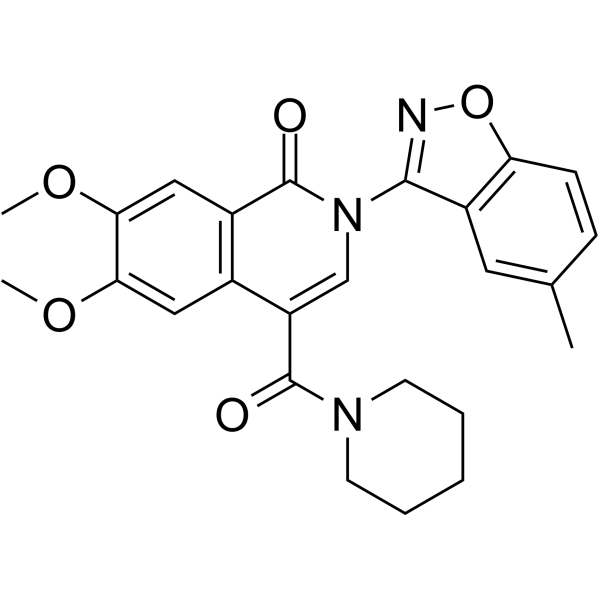 0 ImagesAS2717638 is a highly selective, brain-penetrant and orally active lysophosphatidic acid receptor 5 (LPA5) antagonist with an IC50 value of 38 nM. AS2717638 is highly selective and shows no significant antagonistic activity against other LPA receptors (LPA1, LPA2, and LPA3). AS2717638 can be used in the research of pain and neuroinflammation-related diseases.
-
H2L 5765834
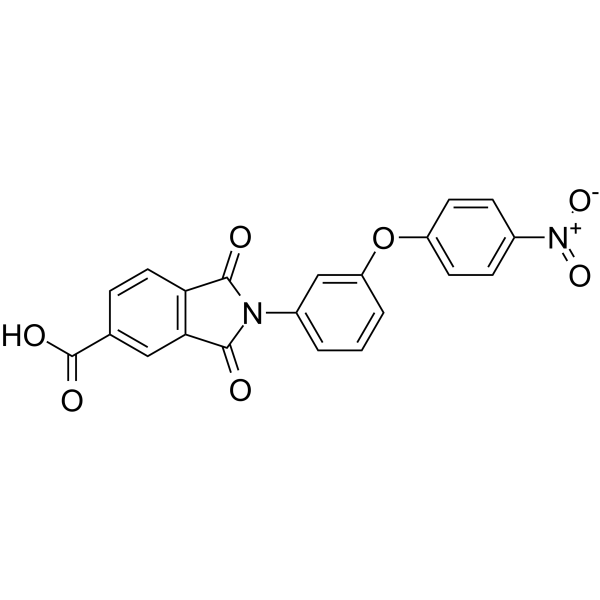 0 ImagesH2L 5765834 is an antagonist of lysophosphatidic acid receptors LPA1, LPA3, and LPA5, with IC50s of 94, 752, and 463 nM respectively.
-
N-PTyrosine PA ammonium
 0 ImagesCat. No.: HY-W040176CAS No.: 799268-45-4Synonyms: N-Palmitoyl-tyrosine phosphoric acid ammoniumN-PTyrosine PA (N-Palmitoyl-tyrosine phosphoric acid) ammonium is a lysophosphatidic acid (LPA) receptor modulator, which exhibits weak inhibitory activity against LPA1 and partial agonist properties towards LPA5. N-PTyrosine PA ammonium inhibits the activation of LPA receptors and downstream responses by competing with agonists for binding sites. N-PTyrosine PA ammonium can induce morphological changes and aggregation, and also inhibit LPA-induced morphological changes through receptor desensitization caused by pre-incubation. N-PTyrosine PA ammonium can be used in the research of related diseases such as atherosclerosis and acute ischemic syndromes (e.g., unstable angina, myocardial infarction, stroke).
-
BrP-LPA sodium
 0 ImagesCat. No.: HY-148291CAS No.: 944265-88-7BrP-LPA sodium is a pan-opposite agent for lysophosphatidic acid (LPA). It has antagonistic activity against LPA1 (IC50 = 4520 nM), LPA2 (IC50 = 468 nM), LPA3, and LPA4. BrP-LPA sodium also has partial agonistic activity for LPA5, with its EC50 being 1282 nM. BrP-LPA sodium has ATX inhibitory activity. BrP-LPA sodium effectively inhibits the migration and invasion of breast cancer cells. BrP-LPA sodium achieves tumor regression and anti-angiogenesis in mice breast cancer xenograft model. BrP-LPA sodium can be used for the study of breast cancer.



